
Celebrating 75 Years: The Story Behind Relay’s Founders

Celebrating 75 Years: The Story Behind Relay’s Founders

Celebrating 75 Years: The Story Behind Relay’s Founders
5:55

In 1951, Olive and Fred Stevens set out to create something that didn’t yet exist: a place where disabled children could be seen, supported, and included. What began as the Portland Children’s Center has grown into what we now know as Relay Resources, rooted in the same belief that all disabled people belong. Everywhere.


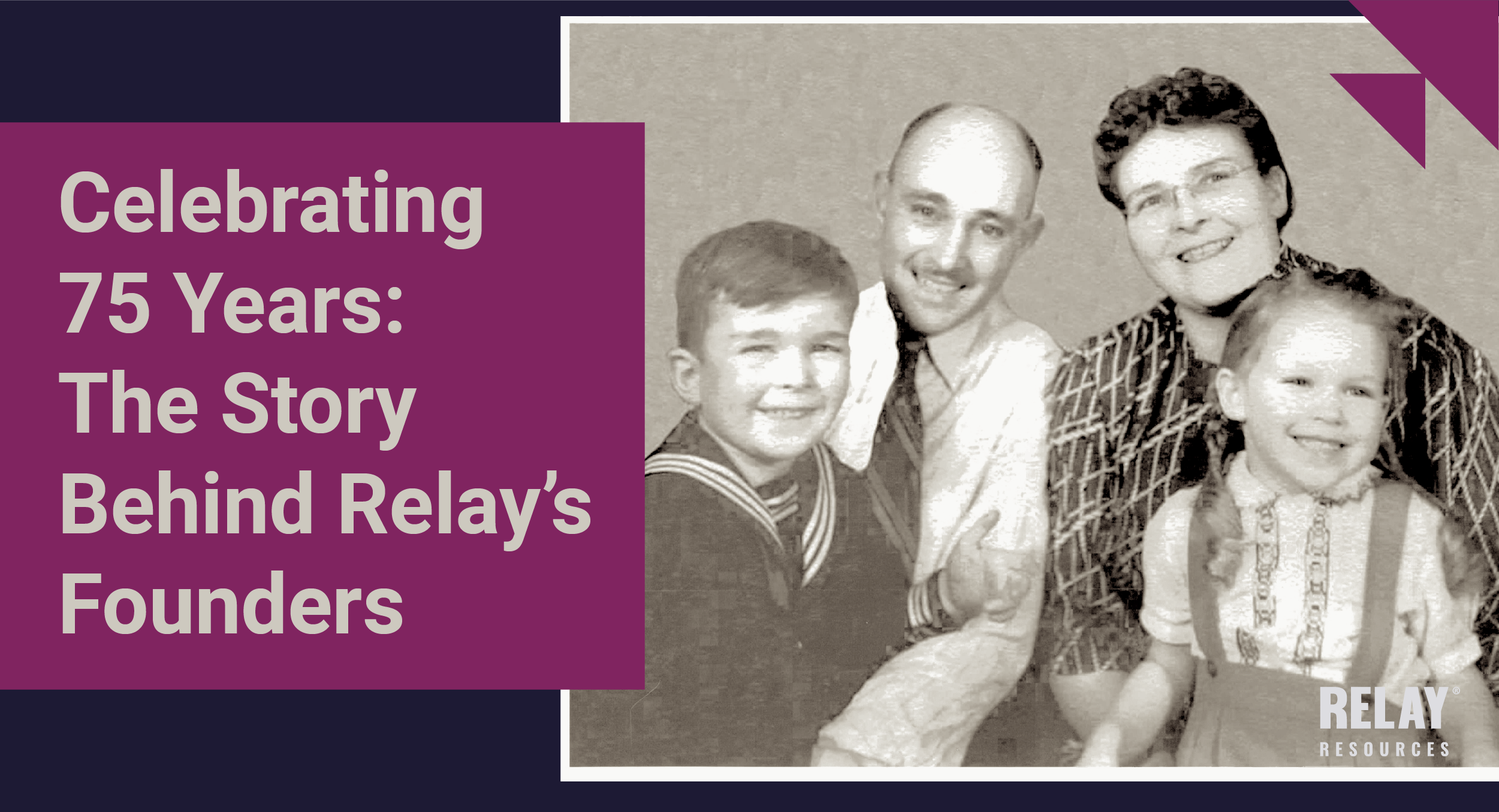
This year, Relay Resources is celebrating its 75th anniversary by looking back at memorable moments in its history. Today we’re learning about the founders of Relay, Olive and Fred Stevens of Portland, who started the Portland Children’s Center in 1951 with several local families. The organization would later become Relay Resources. 

At the heart of that beginning was one family’s experience navigating a system that didn’t yet exist.


At the heart of the beginning

Regis Stevens Anderson remembers worrying about what would happen to her brother, Stanley.

A year older than Regis, Stanley’s oxygen was cut off during his birth in 1939, resulting in a mental disability. With very few resources for families of disabled people in Portland at the time, and many disabled people being relocated to the state hospital in Salem, Regis’ parents, Olive and Fred Stevens, cared for and educated Stanley at home.

But Regis worried: What would happen to Stanley when her parents could no longer take care of him? “Because there were no services, no housing,” she remembers. “Do I take him in and focus my life around him, maybe to the detriment of having my own family? Do I put him in a state hospital [that would be] so foreign to him? He was used to the love of a family and freedom to do what he wanted.”

As it happened, the innovative work of Olive and Fred Stevens would create a path to providing hope, socialization, and dignity to not just Stanley but countless disabled people.


Challenging the stigma

While disabled children were often “hidden” in the back of their homes in mid-20th century America, Olive had a belief that Relay holds dear to this day: Every disabled person deserves to be seen, included, and part of their community. Regis says Olive Stevens was committed to putting Stanley into social situations to reduce the stigma around disabilities.

“We took him out in public all the time,” Regis says. “[My mom] noticed how I would get embarrassed, and she said, ‘We need to educate the public; they need to know about this forgotten population.’ So he went everywhere with us.”

A credentialed teacher, Olive accepted a position in 1947 teaching children with learning disabilities in Vernonia, Oregon. Olive, Stanley, and Regis lived in Vernonia during the week and returned to Portland on the weekends to be with Fred.

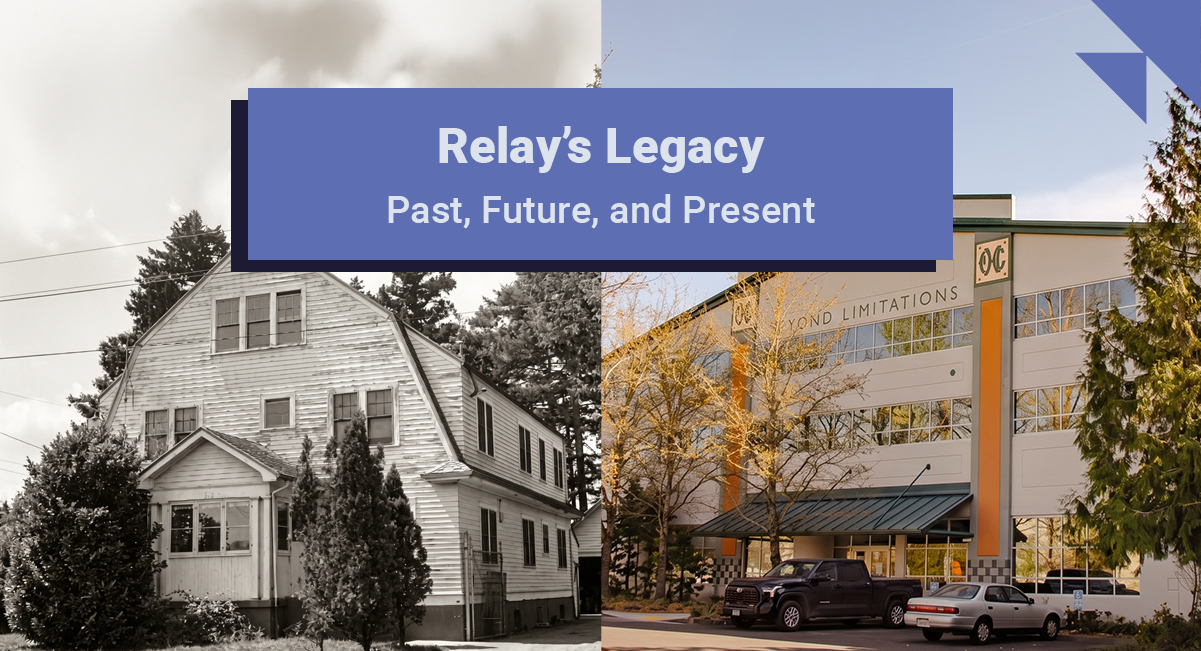
As the Stevens met other parents of disabled children, they saw the need for an institution in Portland to provide them with education, social skills, and more. In 1951, the Stevens and other families launched the Portland Children’s Center (PCC), located in a converted girls' home in Southeast Portland; Stanley was one of their first students. (We’ll learn more about the school in our next blog post.) By the end of the decade, in 1959, PCC had become Oregon’s leader in education for children with intellectual disabilities.


Instilling life lessons

The warmth, kindness, and sense of justice exhibited by the Stevens touched not just the children at Portland Children’s Center, but their own family as well.

Lisa Cochrum, Regis’ daughter and the granddaughter of Olive and Fred, remembers learning important lessons from her grandparents early on. “I think one of the most important things they taught me was that everybody, regardless of their economic situation or their intellectual ability, was on equal footing,” Lisa says, “Everyone had value and everyone had worth, and we were going to treat them that way.”

Growing up with a learning disability, Lisa—who today is a high school science teacher—learned from her grandparents that her disability did not impact her value. Fred bought her a computer before she left for college so she could spellcheck her work and be more likely to thrive academically. Her grandparents also helped her pay for college and ensured she had tutoring and other resources she needed for success.

“I think because they’d done it for my uncle Stanley, they knew that getting the right academic resources for somebody would make a difference in the long haul,” Lisa says. “They were really good at thinking out of the box and being creative with what would help you achieve as much as you could.”


Lasting impact

Decades before the Americans with Disabilities Act prohibited discrimination against disabled people, Olive and Fred Stevens were advocating for disabled rights and championing a world of inclusion.

Their pioneering work helped create a world that values and includes disabled people, and one in which families no longer have to despair about the quality of life of their disabled children.

As Relay Resources now works to advance disability inclusion in the workplace, and include disabled people in every facet of society, Regis is happy about what this means for families with disabled members.

“I’m delighted about what Relay is doing, and that these adults have a hope and a future,” she says. “They don’t have to have siblings worrying about what’s to become of them.”

She says that Olive and Fred Stevens would be delighted to see how disabled people are included in modern society.

“My parents would be in tears,” she says. “They’d be so happy about how far this has all come. It’s really gratifying to see the progress and the acceptance of the public and the support. People are really rallying to help this unseen population.”


Relay's Legacy: A Film Series

Want to see more of the Stevens family’s story and Relay’s history? 


Our Location

5312 NE 148th Avenue
Portland, Oregon 97230

DIRECTIONS