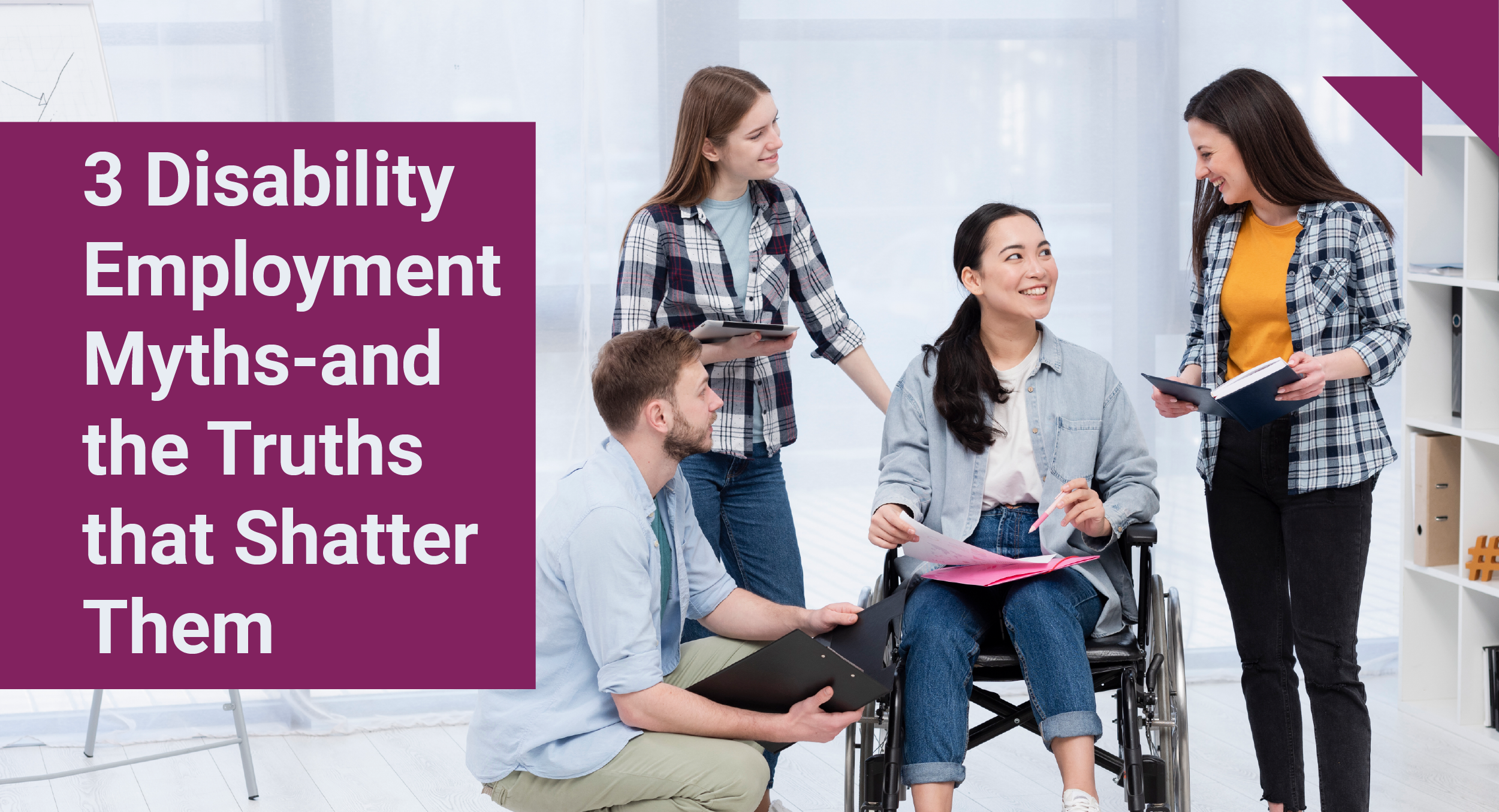
3 Disability Employment Myths – and the Truths that Shatter Them
Contrary to what some think, employing disabled people doesn’t need to be difficult or expensive.
Relay Resources
:
Oct 19, 2026, 3:11:23 PM
The COVID-19 pandemic proved what disabled people had been saying for years: flexible work is possible, practical, and often better for more people than workplaces were willing to admit.
In March 2020, the working world changed almost overnight. As COVID-19 spread, millions of employees moved from offices to kitchen tables, spare bedrooms, couches, and makeshift home workstations. Organizations that had previously described remote work as too complicated, too disruptive, or too difficult to manage suddenly found ways to make it happen.
That shift matters because disabled people had been advocating for many of these same workplace changes long before the pandemic. Remote work, flexible schedules, virtual meetings, asynchronous communication, and reduced commuting were not new ideas. For many disabled employees, they were access needs. Too often, though, those requests were treated as exceptions, inconveniences, or special favors. Then, when the broader workforce needed the same flexibility, what had been framed as impossible became normal.
Many accessibility solutions were never impossible. But they weren't prioritized until more people needed them.
Working from home is not just a workplace perk. For many disabled people, it can be the difference between being excluded from work and being able to participate fully.
Remote work can reduce barriers related to transportation, chronic pain, fatigue, sensory overload, immune risk, caregiving, medical appointments, and workplace environments that were not designed with disabled people in mind. It can also give people more control over their energy, tools, schedules, and communication needs.
Before COVID-19, remote work was often dismissed as impractical or less collaborative. During the pandemic, organizations quickly adopted video meetings, shared documents, flexible scheduling, and new communication norms. The speed of that transition revealed something important: when organizations decide access is urgent, they can redesign work quickly.
The question is not whether workplaces can become more flexible. The question is whether they are willing to build flexibility before people have to fight for it.
Before March 2020, about 6% of full paid workdays in the U.S. were worked from home. That spring, amid COVID restrictions, that number rose to more than 50%. In the years since, remote work has become less common than it was at the height of the pandemic, but it remains far more common than it was before. In 2025, about 22% of U.S. employees worked from home at least some of the time.
Employees continue to value that flexibility. Research has found that employees value working from home at about the same level as an 8% pay increase. Gallup data also shows that among employees with remote-capable jobs, most prefer hybrid or fully remote work, while only a small share prefer being fully on-site.
The benefits are not only about preference. A 2026 study found a positive average productivity effect from working remotely, driven by gains in hourly productivity and increased hours worked. A 2024 study found that hybrid work improved job satisfaction and reduced quit rates by one-third.
Flexible work is effective when it is designed with clarity and access in mind.
The shift to remote work is part of a larger pattern: accessibility solutions often benefit more people than the group they were originally designed to support.
When workplaces design with disabled people in mind, they often create better systems for everyone. Flexible work can support disabled employees, caregivers, parents, people with long commutes, people recovering from illness, and people who do their best work outside a traditional office environment.
Some organizations view this as lowering expectations. But at Relay, we know that it really means removing unnecessary barriers so people can meet high expectations.
The pandemic showed that workplaces can change quickly when they decide change is necessary. Disabled people were not asking for special treatment when they asked for remote work, flexible schedules, virtual participation, or asynchronous communication. They were identifying barriers and offering solutions.
That is especially important to remember during National Disability Employment Awareness Month. NDEAM calls us to recognize the value and talent of disabled employees, but recognition is not enough. Celebrating disabled employees also means building workplaces where access is expected, flexibility is structured, and people do not have to keep proving that inclusion is reasonable.
The accommodations we once said were impossible became normal overnight. Now the responsibility is clear: we should not go backward. We should build workplaces where disabled people contribute, lead, and thrive. Because all disabled people belong. Everywhere.
Contrary to what some think, employing disabled people doesn’t need to be difficult or expensive.
International Women’s Day (IWD),established in 1911,and Women’s History Month have been catalysts for advancing women’s equality across a variety...
People with disabilities often face barriers to getting outside, not just because of their “ability,” but because of factors like ableism and lack of...