 Relay Resources
3 Everyday Things You Can Thank Disabled Designers For
 Relay Resources : Jun 24, 2026 4:06:42 PM
Cruise control. Text messaging. Curb cuts. Some of the everyday tools people rely on most have roots in disability innovation.
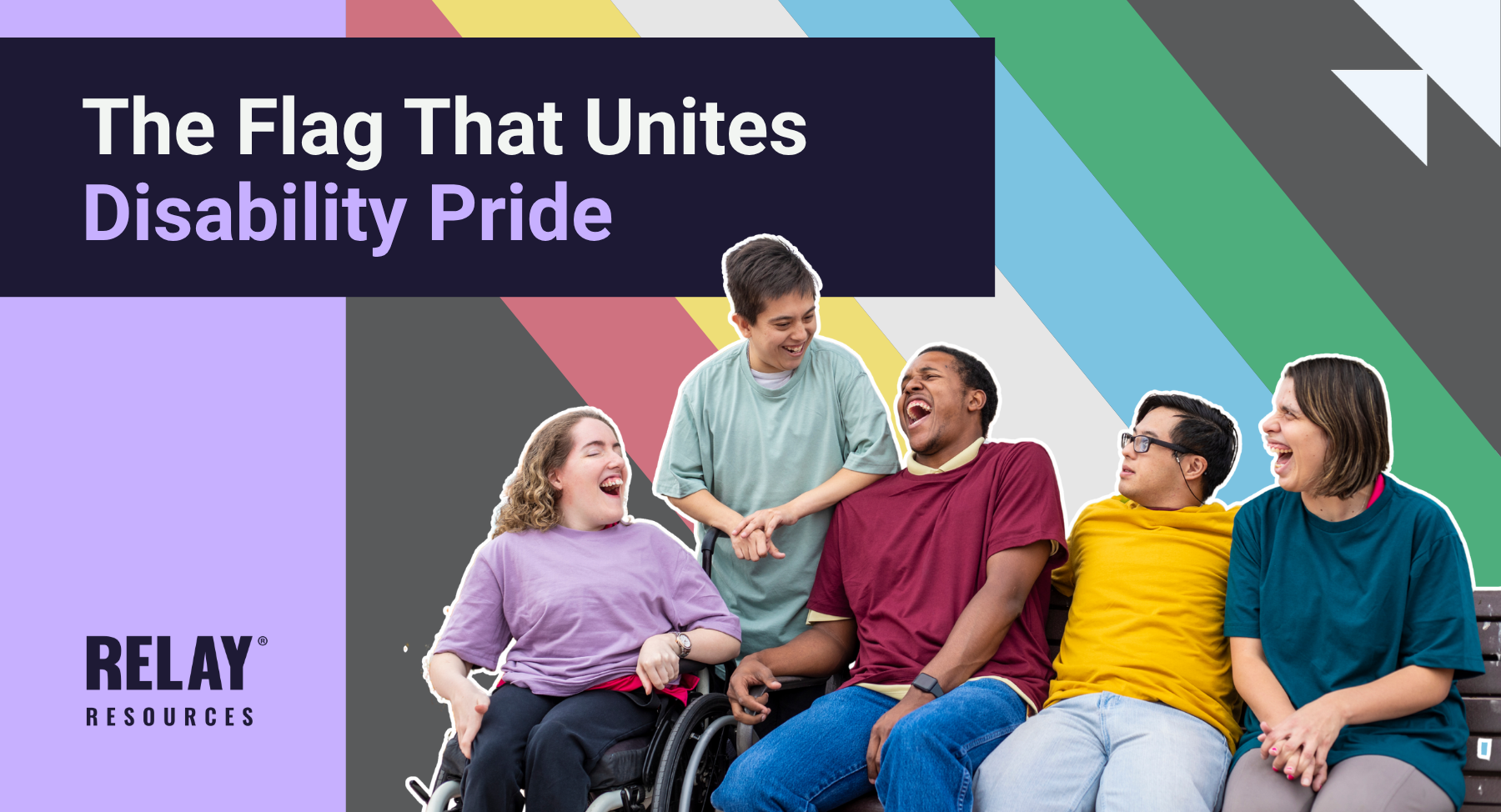
More than a symbol, the Disability Pride Flag tells a story of listening, collaboration, and disability-led design.
Every July, disabled people and allies celebrate Disability Pride Month by honoring disability culture, identity, and the progress made toward a more inclusive world. One of the movement's most recognizable symbols is the Disability Pride Flag. It tells a story of community, collaboration, and disability-led design.
First designed by Ann Magill in 2019 and redesigned through community feedback in 2021, the flag has become a symbol of Disability Pride around the world. Its evolution reminds us that the strongest solutions are built by listening to the people they're meant to serve.
Here's the story behind the Disability Pride Flag and what its colors represent.
Ann Magill, a writer and disability activist who has cerebral palsy, first envisioned the flag in 2010 after attending a disappointing event marking the ADA's 20th anniversary. "It was all hidden away in this institutional office building," Magill told The Accessible Stall. "That's the opposite of what the ADA is about. That's like the un-celebration. I was like, 'Damn it, I want a parade. I want a flag. I want a flag to wave.'"
She continued developing the idea and unveiled the first version of the flag in 2019. Often referred to as the "lightning bolt" design, it featured bright zigzagging stripes across a black background that represented the ways disabled people often have to navigate inaccessible systems and environments.
Soon after its release, disabled community members pointed out that the design could trigger symptoms for people with photosensitive conditions because of its strobing visual effect when viewed on screens. Magill listened. Working alongside the disability community, she redesigned the flag using muted colors, a charcoal gray background, and diagonal stripes that eliminated the visual issue while preserving its symbolism.
"I think it's even better this way because it truly represents the community because the community came together to solve a problem," Magill said.
The redesign became a powerful example of accessibility in practice: listening, adapting, and creating something stronger together.
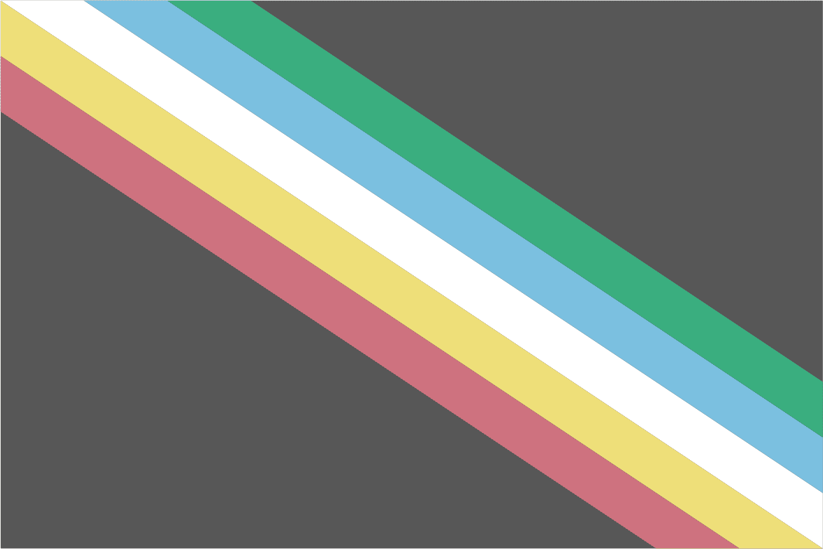
Completed in 2021, the current Disability Pride Flag includes five colored stripes representing different parts of the disability community:
Magill explains the charcoal gray background represents "the anger and mourning over the eugenics and the neglect that disabled people have to fight against," acknowledging both the history and ongoing impact of discrimination, institutionalization, and exclusion.
Since its redesign in 2021, the Disability Pride Flag has become a widely recognized symbol at Disability Pride celebrations around the world.
Magill placed the flag in the public domain, removing her copyright so communities can freely use, adapt, and share it.
"I designed this flag to be for all disabled people," she said. "I wanted something we could wave proudly in public. Something that says: We are here. We are united. And we are not invisible."
This Disability Pride Month, we celebrate not only the flag itself, but what it represents: a community that continues to advocate, innovate, and shape a more inclusive future. Together, we can build a world where all disabled people belong. Everywhere.
 Relay Resources : Jun 24, 2026 4:06:42 PM
Cruise control. Text messaging. Curb cuts. Some of the everyday tools people rely on most have roots in disability innovation.
.png) Relay Resources : May 29, 2026 12:57:33 PM
Relay Resources : May 29, 2026 12:57:33 PM
Many workplace cultures reward conformity without recognizing the toll it takes on employees who feel pressure to hide parts of themselves just to...
 Relay Resources : Feb 3, 2025 9:00:00 AM
Relay Resources is pleased to announce the upcoming DisabilityNext™ Summit, an event dedicated to advancing conversation and actions around...
5312 NE 148th Avenue
Portland, Oregon 97230